Innovative methods in modern fish farming.
During the field trip, each participant will have the opportunity to explore two sites: a women-led fish processing group and an integrated farming system (fish- rice- vegetable- fruit trees, etc.). This will allow participants to see how local communities create value through fish-based products and practice sustainable, mixed farming methods.
To ensure all participants have a comfortable learning experience, field trip participants will be divided into two main sets (Set I and Set II), with each set further divided into 2 groups for transportation purposes. Each group will include 1-2 translators.
Set I will visit:
Set II will visit:
Please choose between Set I and Set II. Each set can accommodate 40 participants, divided into two groups of 20. Selection will be on a first-come, first-served basis. Those who do not make a selection before 29 September will be assigned to a group automatically. The final list of participants for Set I and Set II will be announced on 30 September. Please use this link to make your selection: https://forms.gle/pNLR2u1qE8hShGFb6
Note: The field visits will take place outdoors, and the weather can be hot. We recommend bringing an umbrella, sunglasses, and a cap for sun protection. Comfortable shoes are also advised for walking around the farms and ponds. Lunch and refreshments will be provided, with some of the food prepared by the host communities.
| Time | Activity |
|---|---|
9.00 |
Leave AIT |
10.00 |
Arrive at Site A: Community Enterprise for Fish Processing, Moo 8, Klong Hok |
10.00 - 12.00 |
Tour of Community Enterprise for Fish Processing, Moo 8, Klong Hok |
12.00 - 12.50 |
Lunch |
12.50 |
Leave Community Enterprise for Fish Processing, Moo 8, Klong Hok |
14.00 |
Arrive at Kok Nong Na Baan Mana for a break |
14.00 - 14.15 |
Refreshments and visit to the community market |
14.15 - 16.15 |
Tour of Site C: Pu Yai Udom’s Integrated Farm |
16.15 |
Leave Pu Yai Udom’s Integrated Farm |
17.30 |
Arrive at AIT |
| Time | Activity |
|---|---|
9.00 |
Leave AIT |
10.00 |
Arrive at Site C: Pu Yai Udom’s Integrated Farm |
10.00 - 12.00 |
Tour of Pu Yai Udom’s Integrated Farm |
12.00 - 12.50 |
Lunch at Kok Nong Na Baan Mana and visit to the community market |
12.50 |
Leave the site |
14.00 |
Arrive at Site A: Community Enterprise for Fish Processing, Moo 8, Klong Hok |
14.00 - 15.00 |
Tour of Community Enterprise for Fish Processing, Moo 8, Klong Hok |
15.00 - 15.15 |
Break for refreshments |
15.15 - 16.15 |
Continue tour of Community Enterprise for Fish Processing, Moo 8, Klong Hok |
16.15 |
Leave Community Enterprise for Fish Processing, Moo 8, Klong Hok |
17.30 |
Arrive at AIT |
| Time | Activity |
|---|---|
9.00 |
Leave AIT |
10.00 |
Arrive at Site B: Lam Sai Pattana Community Enterprise |
10.00 - 12.00 |
Tour of Lam Sai Pattana Community Enterprise |
12.00 - 12.50 |
Lunch |
12.50 |
Leave Lam Sai Pattana Community Enterprise |
14.00 |
Arrive at Site D: Ban Luang Moo 1 – Khok Nong Na Model |
14.00 - 15.00 |
Tour of Ban Luang Moo 1 – Khok Nong Na Model |
15.00 - 15.15 |
Break for refreshments |
15.15 - 16.15 |
Continue tour of Ban Luang Moo 1 – Khok Nong Na Model |
16.15 |
Leave Ban Luang Moo 1 – Khok Nong Na Model |
17.30 |
Arrive at AIT |
| Time | Activity |
|---|---|
9.00 |
Leave AIT |
10.00 |
Arrive at Site D: Ban Luang Moo 1 – Khok Nong Na Model |
10.00 - 12.00 |
Tour of Ban Luang Moo 1 – Khok Nong Na Model |
12.00 - 12.50 |
Lunch |
12.50 |
Leave Ban Luang Moo 1 – Khok Nong Na Model |
14.00 |
Arrive at Site B: Lam Sai Pattana Community Enterprise |
14.00 - 15.00 |
Tour of Lam Sai Pattana Community Enterprise |
15.00 - 15.15 |
Break |
15.15 - 16.15 |
Continue tour of Lam Sai Pattana Community Enterprise |
16.15 |
Leave Lam Sai Pattana Community Enterprise |
17.30 |
Arrive at AIT |
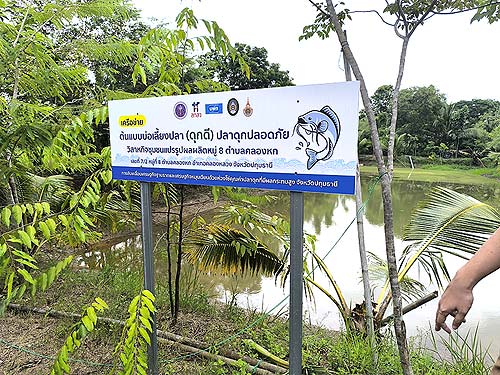
After the 2011 floods disrupted local jobs, Noi, a woman in Klong Hok, started experimenting with raising and processing fish as a way to support her family. The first trials were challenging, but turning unsold fish into sun-dried products proved a success and laid the foundation for a community enterprise.
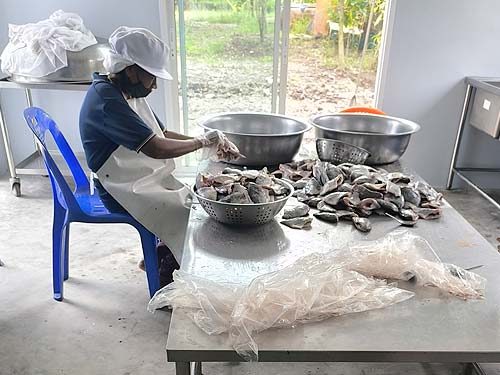
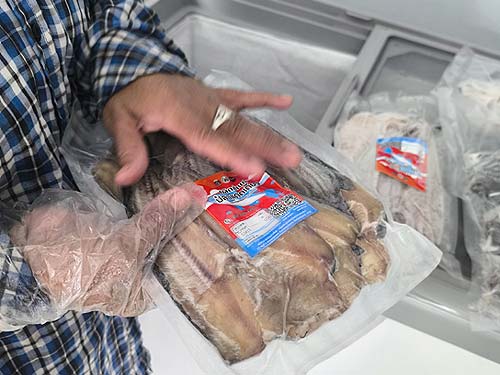
Today, the group produces a variety of value-added fish products, from pla daed diew (sun-dried fish) to fermented sour fish and chili pastes using tilapia, catfish, and gourami. With production reaching 500 kilograms of tilapia each week, the enterprise supplies local customers and is supported by institutions to expand their market reach. Income from processed fish is now about 50% more than that from fresh fish, making aquaculture a true driver of change.
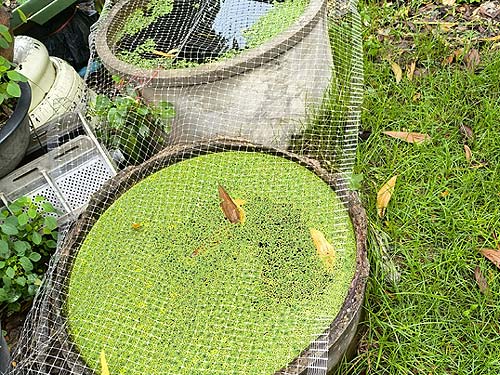
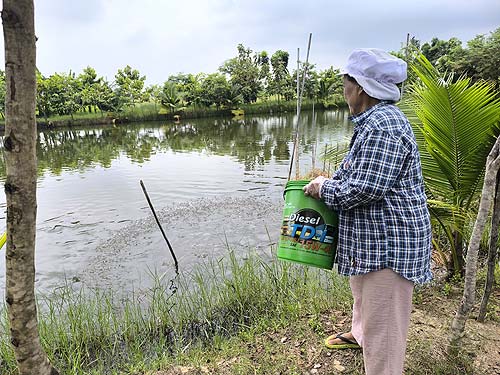
Visitors will see household-based processing facilities moving toward Good Manufacturing Practices (GMP) certification, fish ponds where tilapia and catfish are raised on vegetable scraps from local markets, and a lively farmer truck tour of the farm. This sustainable cycle shows how waste can become feed and how processing creates more value for the community.
What makes this site truly special is its people: a women-led group of 24 members who turned a crisis into an opportunity. Under strong local leadership, they have built stable incomes, strengthened community ties, and become a model of resilience. Their story shows how aquaculture, when combined with innovation and collaboration, can empower lives and communities.
With more than 20 years of experience, Pu Yai Udom’s farm is a model of integrated agriculture with rice fields, ponds, crops, and livestock. Spread across 14–15 rai (about 2 hectare), the farm demonstrates how water, plants, and fish can support one another, for example, pond water nourishes rice fields, while crops at the edges of the fields provide natural food for fish.
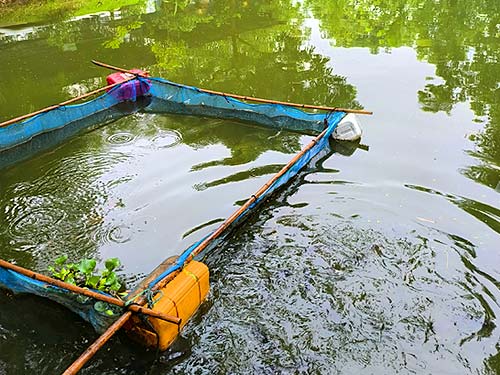
The farm raises both catfish and scaled fish using a mix of methods: traditional, semi-natural, and modern approaches. Visitors will see fish cultivated in rice fields, ponds where natural feed is encouraged, and areas where feed is supplemented only when needed. This variety shows the real challenges and choices farmers face, from small-scale household practices to more economic models.
Recognized as Pathum Thani’s “Outstanding Integrated Farm” in 2021-2022, Pu Yai Udom’s farm also serves as a community learning center. Participants will visit demonstration plots on rice and aquaculture, and learn how the village head, his wife and their grandchildren, work together to sustain the farm.
What makes this visit special is its insight into self-sufficiency and resilience. With water storage ponds, rice paddies, and diverse crops, the farm can support the household for up to a year even during shortages. For GAF9 participants, the site offers a real-world look at rice–fish culture, integrated farming practices, and the blend of tradition and innovation in local aquaculture.
Remark: The nearby farm, Kok Nong Na Baan Mana, practices traditional farming methods and will host the meal for participants. There is also a small community market to explore, and depending on the weather conditions, presentations about integrated farming may be held there.
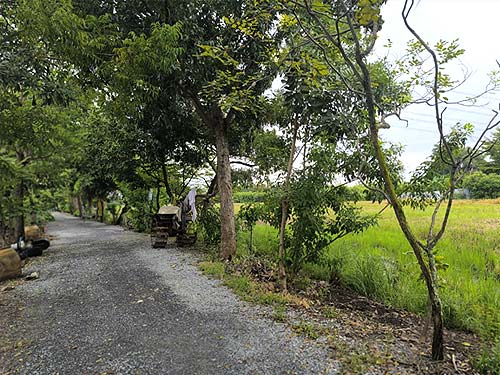
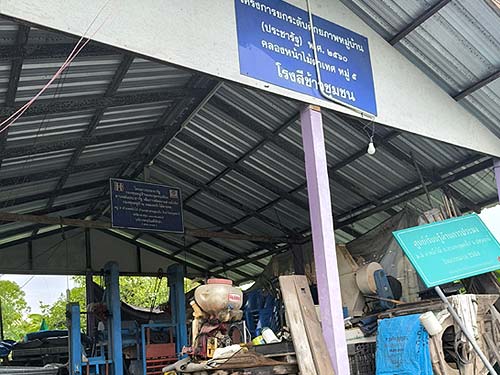
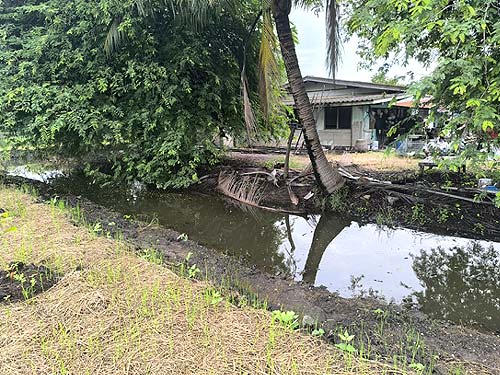
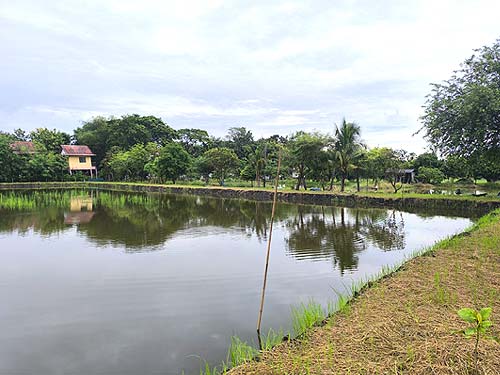
At Lam Sai Pattana Community Enterprise, aquaculture meets creativity. Located on land provided by a local church for agricultural use, this group has built its identity around catfish farming and processing. All raw materials come from their own ponds, ensuring quality and traceability from pond to plate.
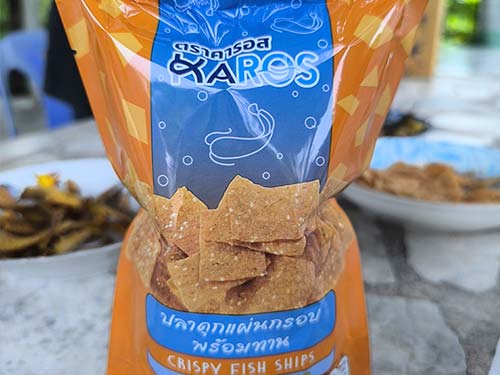
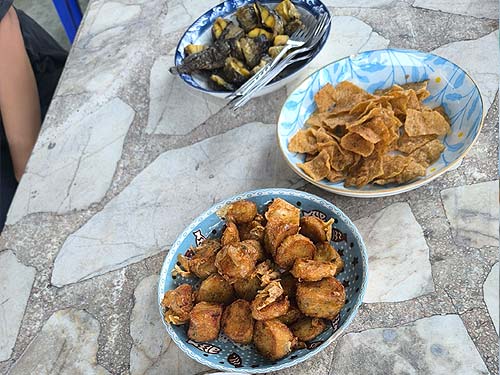
The enterprise specializes in innovative catfish processed products such as sun-dried catfish, catfish rolls, crispy catfish strips, and catfish chips. Production is carried out on a pre-order basis, ensuring freshness and reducing waste. With support from government agencies and universities, the group continues to refine product development, packaging, and quality certification, while also exploring opportunities to bring their products to convenience stores.
Behind this effort is a dedicated team of 16 members from diverse backgrounds, such as rice farming, aquaculture, and day labor, who come together mainly through training and knowledge-sharing. Though the group started by funding their own facilities, recognition from institutions has since brought technical support in areas such as FDA approval, communications, and marketing.
Visitors will have the chance to join a hands-on workshop in fish processing and taste the unique products. The visit also includes a walk to catfish ponds, where participants can see firsthand how the fish are raised and how the community coordinates to supply feed and manage production. This site showcases how local initiative, collaboration, and innovation can transform a humble fish into diverse, market-ready products, and how aquaculture continues to empower communities with knowledge, income, and pride.
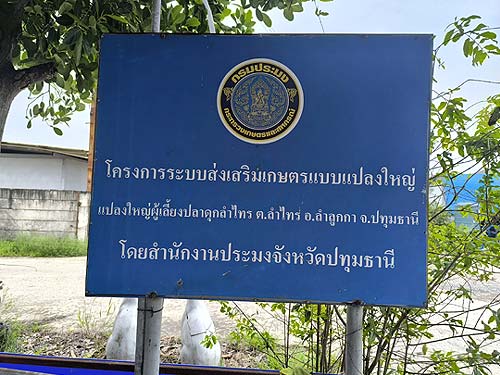
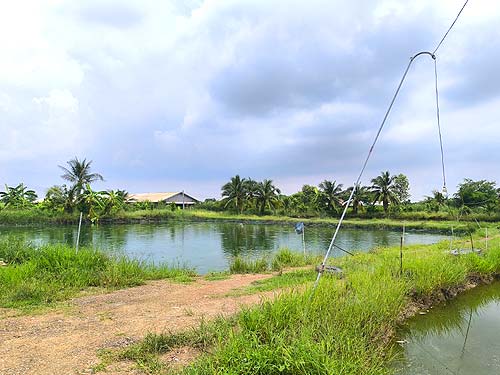
Ban Luang Moo 1 is a living example of the Khok Nong Na Model, inspired by King Rama IX’s philosophy of sufficiency economy. The Khok Nong Na Model is a land management and farming approach combining three key elements, “khok” (mounds), “nong” (ponds), and “na” (rice fields), to create a balanced, circular ecosystem where water, soil, plants, and animals all support one another. Starting from a small family farm, the site has grown into a model learning center for the district, now in its third year of practice, all on just five rai of land.
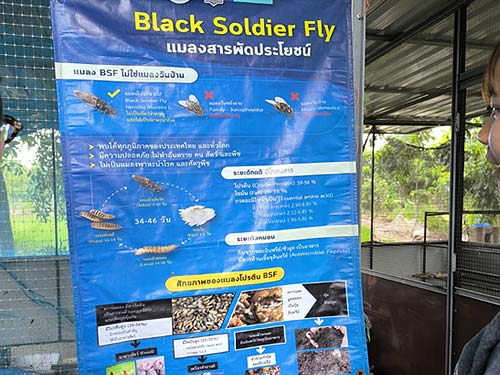
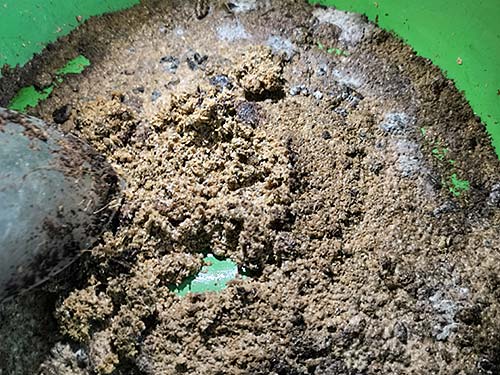
Visitors will see fish swim freely between ponds and rice fields, providing food for ducks and Black Soldier Fly larvae turn organic waste into feed for chickens and fish, while also reducing household and community waste through partnerships with local schools.
The farm is not focused on commercial sales but on community empowerment. Local branding exists with stickers, bottled water, and packaged produce yet the main emphasis is on creating a space for learning and for other community members to sell their goods during study visits. Supported by partners such as PTT CSR, environmental institutes, and universities, the site continues to grow with resources, such as BSF breeding houses and training support.
With only eight members (three men and five women), this community enterprise embodies resilience and collaboration. Field trip participants will experience hands-on activities such as collecting duck eggs, making natural fertilizer, harvesting vegetables, and cooking together. The visit offers not just a look at sustainable integrated farming, but a chance to join in and see how aquaculture and agriculture can weave together to build self-reliant, waste-free, and thriving rural communities.